Start with the moment, not the product name
A useful everyday purchase solves a fairly small, specific problem. You want to read without losing the blanket from your shoulders. Your child needs a dry pair of mittens for the trip home. A sports bag needs a towel that is easy to recognize. Starting with that moment makes the choice clearer than starting with the longest list of features.
Think about where the item will be used, who will use it and what already works in your routine. A heated wrap belongs near a suitable power outlet, while ordinary knit accessories go with you outside. A large cooler makes sense only if you have room to carry and secure it. A bulk pack is useful when its contents fit the people receiving them.
Before comparing colors, write down two or three details that matter most. For a wearable blanket, those might be a hood, sleeves and easy access to the controller. For mittens, they might be hand length, a comfortable cuff and enough spare pairs. This short list helps keep an attractive photograph from doing all the deciding.
Then check the selected version. A product family may contain different dimensions, colors, ages or quantities. Read the variant name, look through its photographs and review the current offer before purchasing. Similar names are not evidence that two versions have identical specifications. Keep the supplied instructions once the item arrives; they belong with the product for as long as you use it.
Choose a wearable blanket around your routine
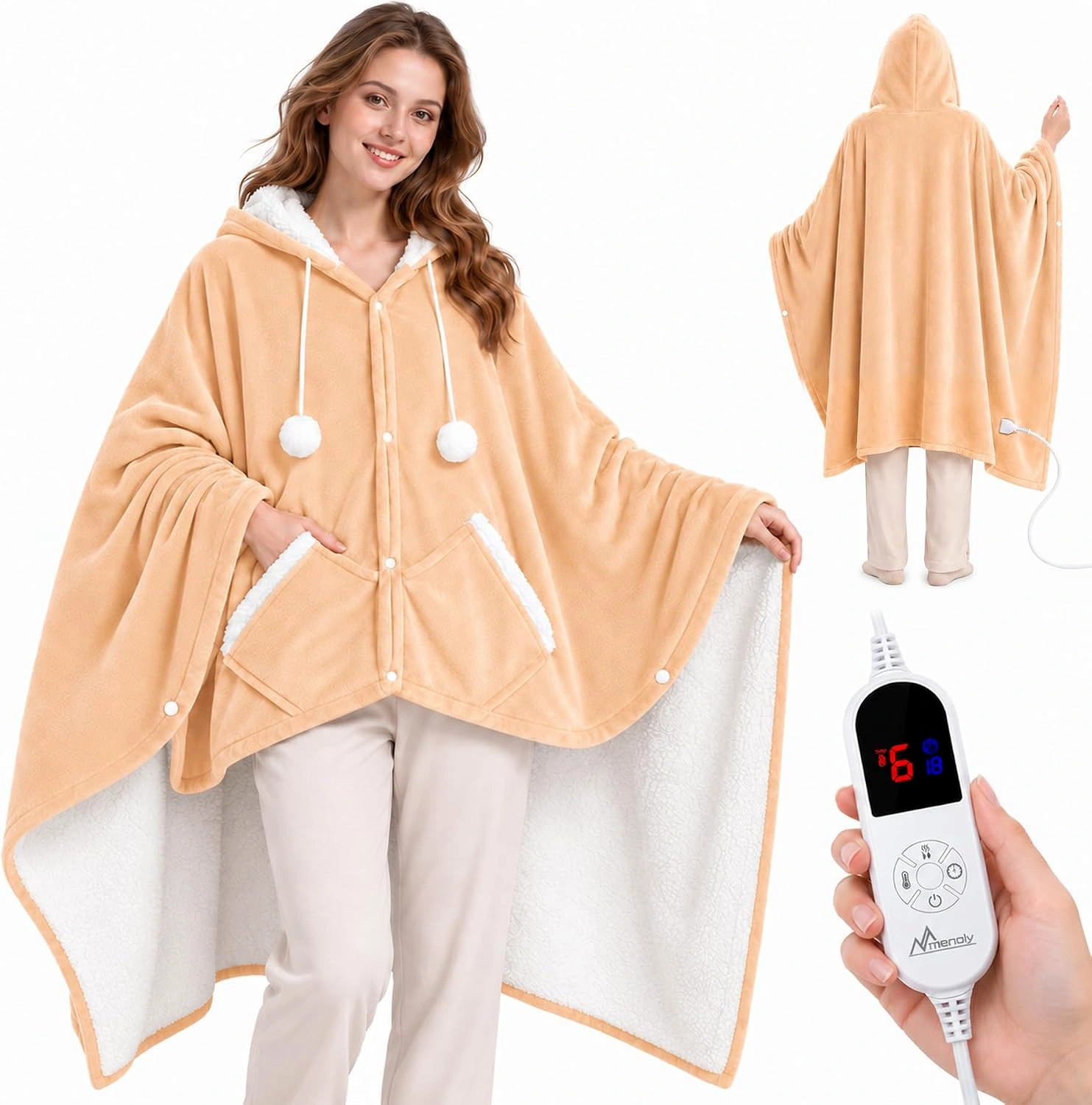
A wearable blanket changes how fabric stays around you. A hooded shawl drapes over the shoulders and can close at the front. A sleeved design gives each arm its own opening, and a foot pocket provides a place for your feet while seated. These shapes are useful for different habits, so imagine the activity rather than choosing by appearance alone.
If you read with a book in both hands, look at where the sleeve opening falls. If you regularly reach for a remote or phone, consider the pocket position. If your chair reclines, think about how the blanket will sit around your legs. Compare the measurements with a blanket you already own, rather than trying to judge overall coverage from a model photograph.
MENOLY’s apricot hooded shawl has six heat settings and a timer that runs from one to ten hours. The ivory sleeved design also has six settings, with a timer from one to twelve hours. These are controls to use according to the exact product manual. A longer timer is not a recommendation to leave a powered blanket operating for longer than is appropriate for the user and situation.
Prepare the space before switching on. Keep the controller where you can reach it and arrange the cord so it is not trapped or stretched across a walkway. Inspect the fabric, plug and connections. The U.S. Consumer Product Safety Commission advises checking electric blankets for damaged wiring, frayed areas and signs of overheating. Stop using damaged equipment and follow the manufacturer’s instructions.
Do not treat an electric blanket like an ordinary extra layer. The CPSC warns against folding an operating electric blanket or covering it with other items because heat can build up. Use the product in its intended arrangement, and switch it off when you finish. If the instructions are missing or unclear, obtain the correct manual before use.
Cleaning also depends on the exact model. A detachable controller does not mean every washing or drying method is suitable. Disconnect the product and follow its care label, including any requirements for drying before reconnection. Keep the controller and connections dry as directed. For someone who cannot safely operate or sense the heat of the product, seek appropriate professional and manufacturer guidance before choosing a heated option.
 Enlarge photo ↗
Read the material together with the construction
Fabric names describe different aspects of how an item feels. Flannel commonly refers to a soft surface treatment or fabric construction, while Sherpa describes a fleecy texture. The two can appear on opposite sides of a blanket. They do not, by themselves, tell you the exact fiber content, thickness or washing instructions of every product that uses those words.
Look at the full description and care label together. A smooth outer surface may suit the look of a living room; a textured lining may be the part you notice against your clothing. Pockets, fastenings and seams also affect the experience. A fabric close-up helps you understand the texture, but it cannot replace the written material specification.
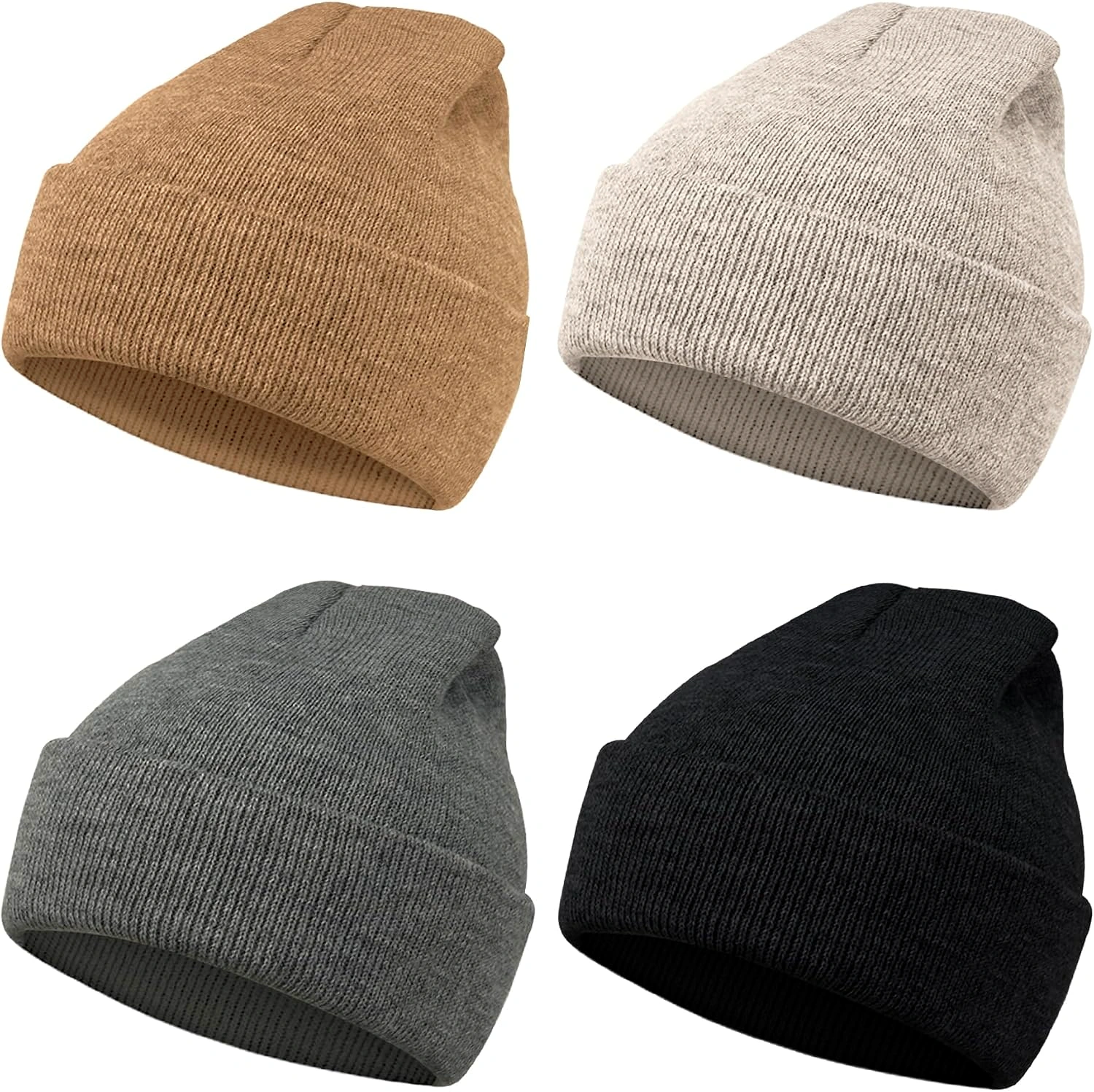
Stretch knit accessories work differently. Their flexible loops let the fabric move around the hand or head, and a small amount of stretch fiber can help the shape adapt. A close cuff may feel useful at the wrist or around the ears. None of this automatically makes a knitted item waterproof, windproof or suitable for prolonged exposure to wet snow.
Choose the construction for the job. Light knit gloves can be convenient for ordinary cool-weather errands. If you need waterproofing, substantial insulation or protection for work, look for equipment specifically designed and documented for that purpose. An everyday accessory should not be asked to perform as specialist protective gear simply because it looks warm.
Finally, consider the care routine you will actually follow. A hand-wash item needs a different place in your laundry schedule from an item whose label permits machine washing. Keep the label, avoid guessing from a similar product and let items dry fully before storing them. Good care starts with matching the instructions to the exact item in front of you.
Make winter accessories easier to find and fit
For families, the challenge is often organization as much as warmth. A pair that fits well is less useful if one mitten is missing when it is time to leave. Keep everyday accessories in a shallow basket or a named compartment close to the coats. Give dry spares a separate place so used or damp items do not disappear back into the ready-to-wear pile.
Start sizing with an item that already fits. Measure a glove or mitten from the opening to the fingertips and compare that measurement with the product details. For a hat, check how the cuff sits around the forehead and ears. Age guidance is approximate: children of the same age can have different hand and head sizes.
Try the item on before relying on it for an outing. Fingers should have room to move, and the cuff should feel comfortable without slipping off. A hat should stay in place without needing constant adjustment. Ask the child how it feels and watch whether they can move naturally. A familiar fit check is more useful than assuming a stretch fabric will suit everyone.
Multipacks make sense when the extra items have a clear role. One pair can stay at home, another can travel with a school bag and another can be kept dry for the return trip. Use color to distinguish people or locations if that helps your household. Avoid sharing worn items without washing them, and check the care label before putting a mixed batch into the laundry.
Bulk packs need a little more planning. Count the recipients, confirm the likely sizes and find out whether a school, group or collection has specific requirements. Keep the original product and care information available. If you are assembling winter kits, think about how the hat and gloves will be stored and handed out, rather than treating a large quantity as the whole solution.
When the weather turns wet, replace damp accessories promptly with dry ones. Ordinary knit mittens are not the same as waterproof snow mittens. Choose layers around the actual conditions and the length of the outing, and check on children regularly. The goal is a practical routine that is easy to repeat, with the right dry items ready when they are needed.
 Enlarge photo ↗
Pack towels and sports equipment with fit in mind
A cooling towel is a small convenience in an active-day bag. The MENOLY multicolor set is used by wetting the towel, wringing out excess water and snapping it as directed. Its feel depends on moisture and surrounding conditions, so rewet it when needed instead of expecting one fixed cooling time in every environment.
Assign each person their own towel and keep used towels separate. Let a towel dry before closing it away in a bag, and follow its washing instructions. Carry ordinary essentials such as drinking water and arrange breaks appropriate to the activity. A cooling towel is not medical treatment and does not replace shade, rest or care when someone feels unwell in the heat.
Sports equipment requires a more careful fit decision than a towel. A mouthguard needs to suit the person who will wear it, including their teeth and any orthodontic appliances. The American Dental Association recommends properly fitted mouthguards for activities with a risk of dental injury. Ask a dentist for advice when choosing for braces, changing teeth or an uncertain fit.
Follow the fitting directions for the exact mouthguard. Do not borrow a method from another model or guess at heating times. Check whether the guard stays in place comfortably, and inspect it for wear before use. A set with several guards does not remove the need to fit and care for each one individually.
Keep the case with the guard so it has a consistent place in the bag. Clean and dry the equipment according to its instructions before storage. The ADA advises replacing a mouthguard that is damaged, worn or no longer fits properly. Children may need fit reviewed as they grow. Bring questions about the product to a dentist rather than relying on an age range alone.
League and activity rules are another part of the decision. Requirements can differ between sports, teams and competitions. Confirm what is accepted before buying equipment, and ask a coach or organizer when the rule is unclear. A product description should help you compare a model; it should not be treated as universal approval for every setting.
Prepare for a day by the water
A swim mask should be checked on the face before the outing. Adjust the strap gradually and look for a comfortable seal rather than tightening it as much as possible. A fabric strap may be easier to manage around long hair, but comfort still depends on its position and the shape of the frame. Check the nose cover as well as the eye area.
For children, make the fit check part of getting ready with an adult. Ask whether the frame presses uncomfortably or whether the strap catches hair. Follow the product’s care directions after use, including rinsing with fresh water and allowing it to air-dry. Avoid rubbing the inside of a coated lens unless the instructions explicitly permit it.
A mask does not provide flotation or replace supervision. Plan the outing around the child’s swimming ability, the location and appropriate adult oversight. Keep safety equipment suited to the activity separate from accessories intended for comfort or visibility. A colorful mask can make getting ready enjoyable without changing the need for close attention around water.
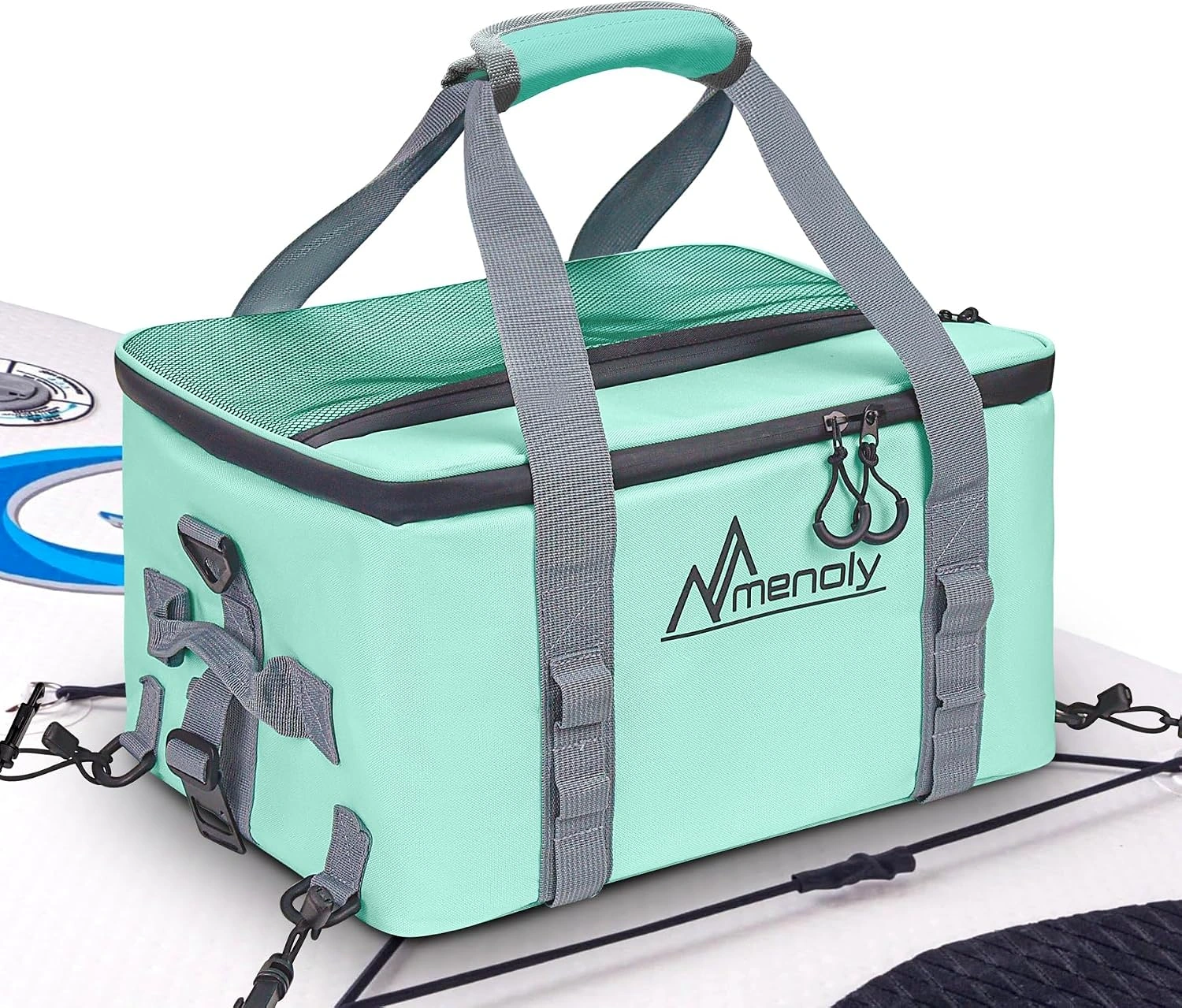
A deck cooler solves a different packing problem. Start by measuring the space available and considering the load you can carry and secure. The MENOLY 25-liter cooler includes removable dividers and several handles. Use the dividers to separate food, drinks and smaller items, and keep frequently needed objects accessible without unpacking everything.
Chill contents beforehand and use food-storage practices appropriate to the trip. Do not assume a fixed safe storage time from an attractive insulation image. Temperature depends on the contents, ice or cooling packs, weather and how often the cooler is opened. Keep valuable electronics in a separate container designed for their protection, even when the cooler’s exterior is described as waterproof.
Before setting out, check how the load is secured and whether it affects the board or boat’s balance and limits. A cooler is not rescue equipment. After the trip, empty it, clean it according to its instructions and let it dry before storing. Packing well includes the return home: dry, organized gear is easier to inspect and prepare for the next outing.
 Enlarge photo ↗
Put a small everyday kit together
A useful kit is a group of items with a shared destination. It does not need to be large. For a reading corner, the kit might be a blanket, a place for the controller and a nearby surface for your book. For a school morning, it might be a hat and a dry pair of mittens in the same easy-to-reach compartment. Organizing by destination keeps the collection practical.
Begin with what you already own. Check whether it fits, works and can be cleaned according to its label. Then identify the actual gap. You might need another dry pair, a more comfortable shape or a container that keeps small pieces together. Buying duplicates is helpful when there is a reason for them, such as a second location or a regular washing rotation.
For shared family gear, make ownership clear. A color, a named compartment or a washable label can help people find their own things. Keep mouthguards and other personal-use items separate. A shared basket can organize clean hats, but it should not become a place where damp towels and worn equipment are mixed with items ready for use.
Check the whole kit before leaving, not just its most visible item. A swim mask needs the right fit and a place to dry afterward. A towel needs water for activation. A cooler needs appropriate contents, cooling packs when required and a secure way to carry the load. Thinking through these connections can prevent an otherwise suitable accessory from becoming inconvenient.
Use a simple return-home routine. Empty the bag, separate anything wet, inspect items that took a knock and put clean, dry pieces back in their usual place. Keep manuals and spare parts together in a location adults can find. If an item is damaged, set it aside immediately so someone else does not mistake it for ready-to-use equipment.
Revisit the kit when the season or activity changes. Children grow, schedules shift and a weekend outing may need a different set of things from a short daily walk. The point is to make preparation easier with a few suitable essentials, rather than filling every available pocket. A small collection that is easy to check and maintain often serves a routine better than a bag full of uncertain extras.
A final check before you buy
Return to the short list you made at the start. Does the selected product solve the situation you had in mind? Check the version name, dimensions, included pieces and care instructions once more. If a detail is essential and still unclear, resolve it before ordering rather than assuming that a photograph answers it.
Review the current offer in the purchase tab. Confirm the final price, delivery estimate and return conditions for your address. A checked price on a guide is useful for comparison, but it does not reserve stock or fix the terms of a future order. Keep the order confirmation where you can find it if you later need tracking or support.
When the item arrives, compare the contents with the order and read the supplied information before use. Keep accessories together, test fit in an appropriate setting and set aside anything damaged or incorrect. Use the support options attached to the order for a problem with the item. A few minutes of careful checking can make the product easier to use, care for and keep ready for the next ordinary day.
Sources and further reading
Product details refer to the selected versions in this collection. For electrical safety and mouthguard care, consult the CPSC Home Electrical Safety Checklist and the American Dental Association’s mouthguard guidance. Keep and follow the instructions supplied with your product.